Work

I know how large life sciences and healthcare organizations adopt code-first platforms, because I've spent the last eight years helping them do it at Posit.

I joined Posit in 2018 as the first Account Manager focused on enterprise Life Sciences and Healthcare. Nobody had a playbook for selling a code-first data science platform into regulated drug development, so I got to help write one alongside a strong team of solutions engineers and our Director of Life Sciences. Eight years in, the relationships we've worked on span top global pharmas, health systems, the FDA, and the cloud partners that surround them all. This page is what that work looks like.

The organizations I've sold to for years are all trying to figure out AI, and I'm in those conversations every week.

A pharma company that wants to put AI into clinical development has to answer the same questions my customers have asked me for eight years. Can we validate it? Will it stand up in front of a regulator? How do we govern what scientists and statisticians build with it? I sit on the vendor side of those questions with biostatisticians, platform engineers, quality teams, and Chief Data Officers, and I've watched the conversation shift from open-source analytics to AI-assisted everything.

Life sciences companies discover, validate, manufacture, and commercialize products under a level of scrutiny most industries never see. Winning adoption there takes more than a strong demo. Someone has to earn the trust of the users, the IT organization, and the executives all at once, then help the company make the new thing part of how it works. That's the work I do today, and it's never been more interesting: Posit sits right where code-first data science meets AI-assisted development, and the organizations I work with are figuring out in real time how to put both to work.
About Posit

What I have been selling for the last eight years.

Posit is the company behind one of the most widely used tools in data science.

Posit is the company behind RStudio, the most popular coding environment for R, used by millions of people weekly, and now Positron, an AI-assisted IDE for Python and R. Around those tools, Posit builds the enterprise platform: package governance, standardized development environments, and the infrastructure to deploy code-based analytics at scale in regulated settings.

My job was helping large organizations adopt a platform that sits inside the daily work of statisticians, data scientists, and developers, then proving to their leadership why that way of working mattered. In life sciences and healthcare, that meant statistical computing environments, governed open-source usage, reproducible reporting, and data applications that could survive an audit.

First dedicated enterprise seller → player-coach → enterprise manager → director of new business.

I joined in November 2018 as the first Account Manager dedicated to enterprise Life Sciences and Healthcare. When I started, the biggest pharma relationships were small. By the time I moved into management, several of the accounts I ran had grown into seven-figure annual partnerships, and I was regularly leading the company in the largest enterprise deals.

Since 2024, as a sales leader, I've supported teams and accounts across all industries: life sciences, healthcare, public sector, financial services, insurance, and broader enterprise.

A few milestones

  1. 2018
    Joined RStudio (now Posit) as the first Account Manager for enterprise Life Sciences and Healthcare.

    No playbook, no dedicated motion. Focused on the top global pharmas, built user champions, and earned a strategic voice with R&D IT and analytics leadership.

  2. 2019
    125% attainment.

    First full year as the dedicated LSH seller. Top-20 pharma customers were still early-stage relationships; the work to turn them into strategic partnerships was underway.

  3. 2020
    Exceeded target through the pandemic year.

    Landed the company's largest new logo at the time, one of the nation's largest healthcare organizations. Early proof the LSH motion could extend well beyond pharma.

  4. 2021
    Promoted to Enterprise LSH Team Lead; 159% attainment.

    Team expanded beyond pharma into payers, providers, and federal health agencies, while the champions-plus-leadership alignment pattern hardened into a repeatable motion across multiple sellers.

  5. 2022
    127% attainment.

    Deepened the FDA/CDER relationship that would later underpin the industry's first fully modernized regulatory submissions.

  6. 2023
    229% attainment — top seller at Posit as a player-coach.

    Continued to lead the team in the largest strategic deals while supporting broader seller execution. That same year, one of my largest customers submitted their first fully modernized regulatory filing to the FDA using Posit in their statistical computing environment.

  7. 2024
    Moved into full sales management for a six-seller enterprise team.

    Managed sellers across Life Sciences, Healthcare, Financial Services, and Insurance. Team exceeded combined annual quota at 125%+ attainment.

  8. 2025
    Director of New Business.

    Led a new-business group the company had not previously run: six sellers plus a five-person SDR/MDR function covering all industries (life sciences, healthcare, public sector, financial services, insurance, and broader enterprise). Closed significant new-logo volume across all industries and built the AI-assisted workflows to scale the motion.

My Process

How I helped technical platforms become standard inside large regulated organizations.

The pharma accounts I worked on didn't grow because of one big deal. They grew because four things kept happening at once, year after year.

01

Start with the people doing the actual work.

Developers, statisticians, scientists, and analysts are the first real users of any code-first platform, and they usually know whether something is useful before leadership does. In products like Posit, adoption started in the daily workflow: writing code, managing packages, building reports and apps, and sharing analytical work inside the organization.

I focused on identifying those users, understanding their workflow and day-to-day friction, and helping them prove value in ways the rest of the organization could see: workshops, internal showcase days, proofs of concept, architectural sessions with the engineers and solutions teams behind the product.

02

Bring IT and platform leaders along at the same time.

Users can love a platform and still lose if security, platform engineering, architecture, or governance teams are not on board. In regulated industries, those concerns are non-negotiable. So I ran the IT conversation in parallel from day one: deployment, audit trail, reproducibility, compliance, and integration with the systems they had already bought.

That also meant partnering closely with the strategic cloud and data platform teams at AWS, Databricks, Snowflake, and Microsoft, so the platform I was selling fit inside the customer's larger data strategy instead of competing with it.

03

Translate the value up to leadership, in their language.

The early conversation with any customer was almost always about cost. Cost alone was never going to sustain a strategic relationship. What worked was reframing the platform in terms senior leaders cared about: faster experimentation, more productive technical teams, safer deployment of AI-assisted work, and ultimately, faster clinical analysis and delivery of life-saving medicines.

I sold regularly to VPs and global heads of technology, architecture, clinical data science, decision science, and statistical programming, along with Chief Data and AI Officers. A data scientist, an IT leader, and a business executive often cared about different things. My job was to connect the same platform to each of those priorities.

04

Turn one customer's success into a market signal.

In regulated industries, one customer succeeding quietly doesn't move the market. Working with our marketing team, our solutions engineers, and our Director of Life Sciences, I helped organize public webinars where top pharma teams told their own transformation story on camera. I supported the cross-industry initiatives that gave the community a place to converge. And we supported regulators at the FDA in a similar way, running workshops and whiteboarding sessions so that they had the same advanced technology that the pharmaceutical companies were using for submissions.

Customer Stories

Helping customers tell their stories.

Life sciences and healthcare adoption rarely comes down to software procurement. These accounts grew through change management, regulatory engagement, training, and the slow work of making a new platform feel credible inside a highly regulated enterprise. It's where I've spent most of my time, and it's what I think matters most for a new generation of AI platforms entering the same organizations.

I directly managed (and later managed the direct sellers for) many of Posit's top pharma, biotech, payer, provider, and federal health organizations. The stories below are already public: webinars I helped organize alongside a strong team of solutions engineers and our Director of Life Sciences, who together shaped Posit's broader life sciences strategy.

A first-of-its-kind modernization of their regulatory submission process.

In 2023, Novo Nordisk submitted their first trial to the FDA and other health authorities entirely on a modern open-analytics stack. The pharmaceutical industry had spent years working toward that moment. Alongside our solutions engineers and Director of Life Sciences, I worked with their biostatistics, analytics platform, and architecture leaders through the full transformation: whiteboarding sessions, leadership alignment, compliance design, and cross-partner coordination with Microsoft and Databricks.

When the FDA came back asking to reproduce every part of the submission in a ten-day window, the infrastructure held up. I helped organize the public webinar where their team shared the full story from 2015 onward.

Watch the Novo Nordisk webinar →

A five-year modernization of how clinical trials are analyzed and submitted.

What started with a single internal showcase day in 2018 grew into a company-wide program at J&J: a validated analytics environment managed in partnership with their IT organization, a trainer-the-trainer program, shared code catalogs, and a strategic decision to invest in open industry frameworks rather than proprietary internal tooling. By 2024 the work had produced their first set of modernized regulatory submissions.

I was the primary account manager across that arc, working hand in hand with our solutions engineers: running workshops and whiteboarding sessions, aligning with J&J's IT, QA, and legal teams, and organizing the webinar where their team shared the journey publicly.

Watch the J&J webinar →

Shifting the backbone of clinical trial operations to a modern open platform.

Roche and Genentech ran a multi-year program to move their clinical trial analytics onto a modern open backbone. The program spanned training and enablement, code collaboration, industry framework contributions, and product development. They are one of the most influential voices in this industry shift, and an early adopter for the approach.

I worked with our Director of Life Sciences and internal colleagues on the broader industry strategy behind the Roche engagement, and helped organize the public webinar where their senior leaders walked through the transformation.

Watch the Roche & Genentech webinar →

From pilot projects to enterprise-scale adoption.

GSK moved from early pilot projects to a fully enterprise program through the same pattern that made the others work: standardized technical environments, deep investment in internal community building, and leadership alignment on why modernization mattered beyond cost. The annual internal showcase events we supported at GSK became a key forum for analytics teams across the company to see what was possible.

My role was hands-on across the transformation, together with our solutions engineering team: planning workshops, aligning with senior technology and R&D leadership, and coordinating the public webinar where their team shared the program with the broader industry.

Watch the GSK webinar →

AI Workflows and Projects

I started building my own tools to stay ahead of how platforms would be sold next.

All examples shown here are sanitized, public-facing, or built from synthetic or public information. I do not share confidential customer data, internal Posit materials, or proprietary sales content.

I wanted to actually know these tools, not just talk about them on sales calls. So while access was still being rolled out at work, I put in nights and weekends on personal projects with Claude Code, Codex, Cursor, and Windsurf, finding out firsthand what they could and couldn't do.

By the time the tools were available internally, I'd already shipped things with them. I became one of the people others at Posit came to about AI, and I started building workflows for the sales team:

  • Outbound prioritization: using conference speaker lists, public company initiatives, and account research to focus seller attention.
  • Event-level targeting: building a small internal app that routed sellers to the highest-value contacts at each conference.
  • Meeting prep and follow-up: using product documentation and live call transcripts to surface coaching moments and generate more tailored follow-up messaging.

These started as experiments that complemented the platforms our revenue team already ran, like Gong and Outreach. The goal was always to keep the workflow as close as possible to Posit's actual product and real customer conversations. Here are some live examples:

Champion enablement

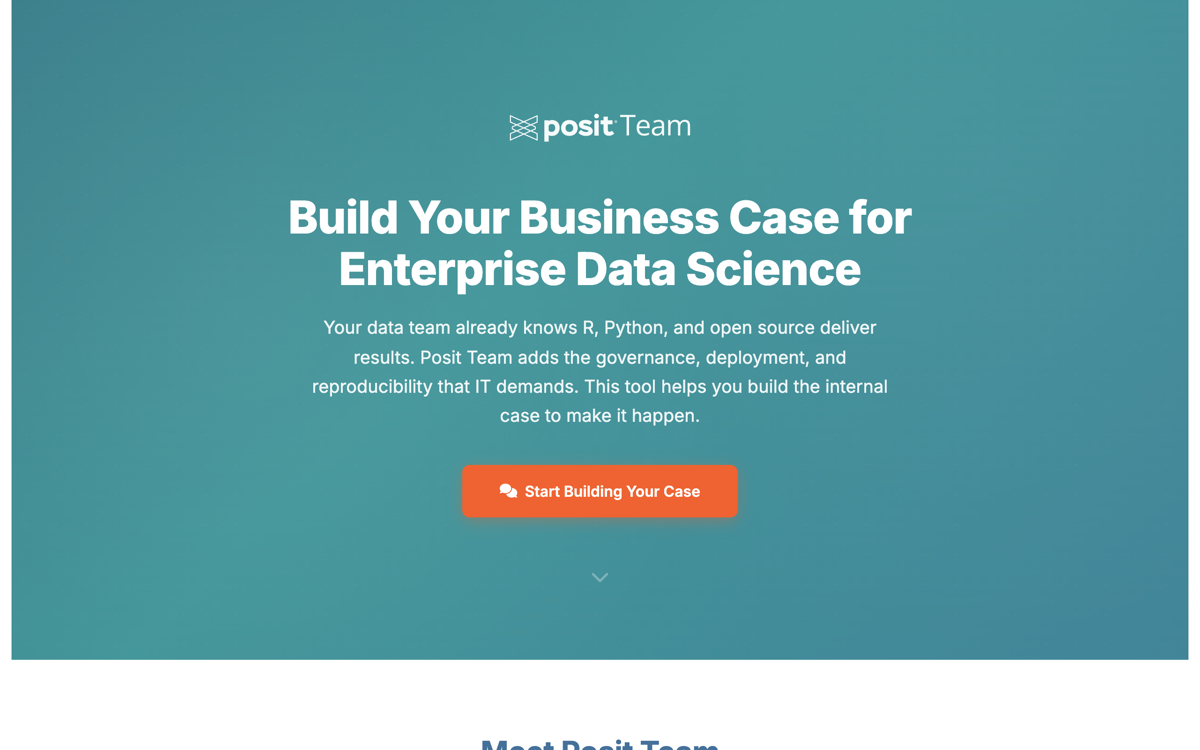
Business Case Builder.

Our user champions usually knew Posit was helping them technically, but they didn't always know how to connect that to their leadership's business goals. They also rarely knew how to speak fluently to IT stakeholders. The Business Case Builder fixes that. It's a conversational app I built on the Claude API that interviews a data team about their data science process, tech stack, and current friction, then generates a tailored business case for their specific situation. It translates a complex product with a lot of features into the language of the leaders they need to convince.

Discovery → custom demo

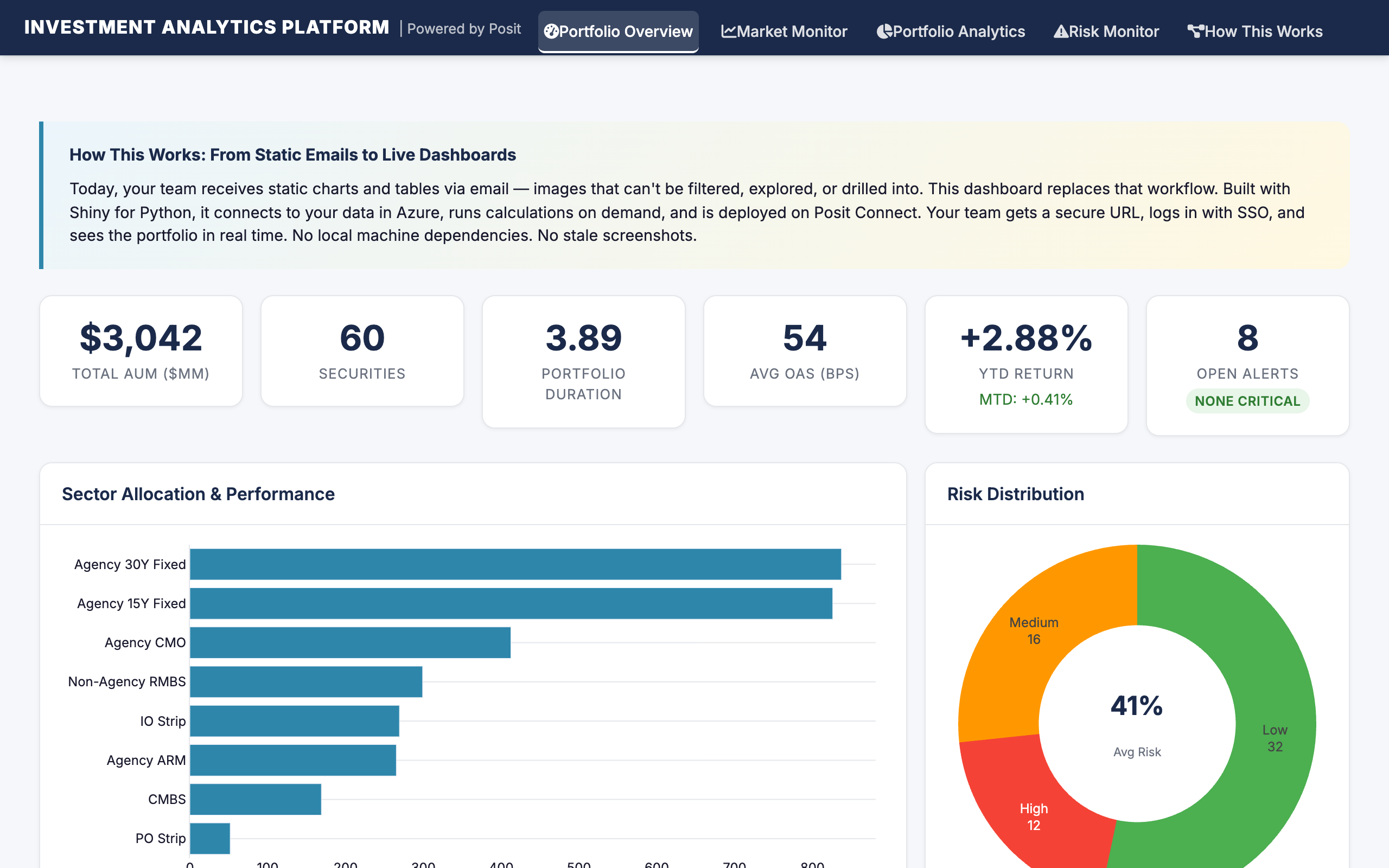
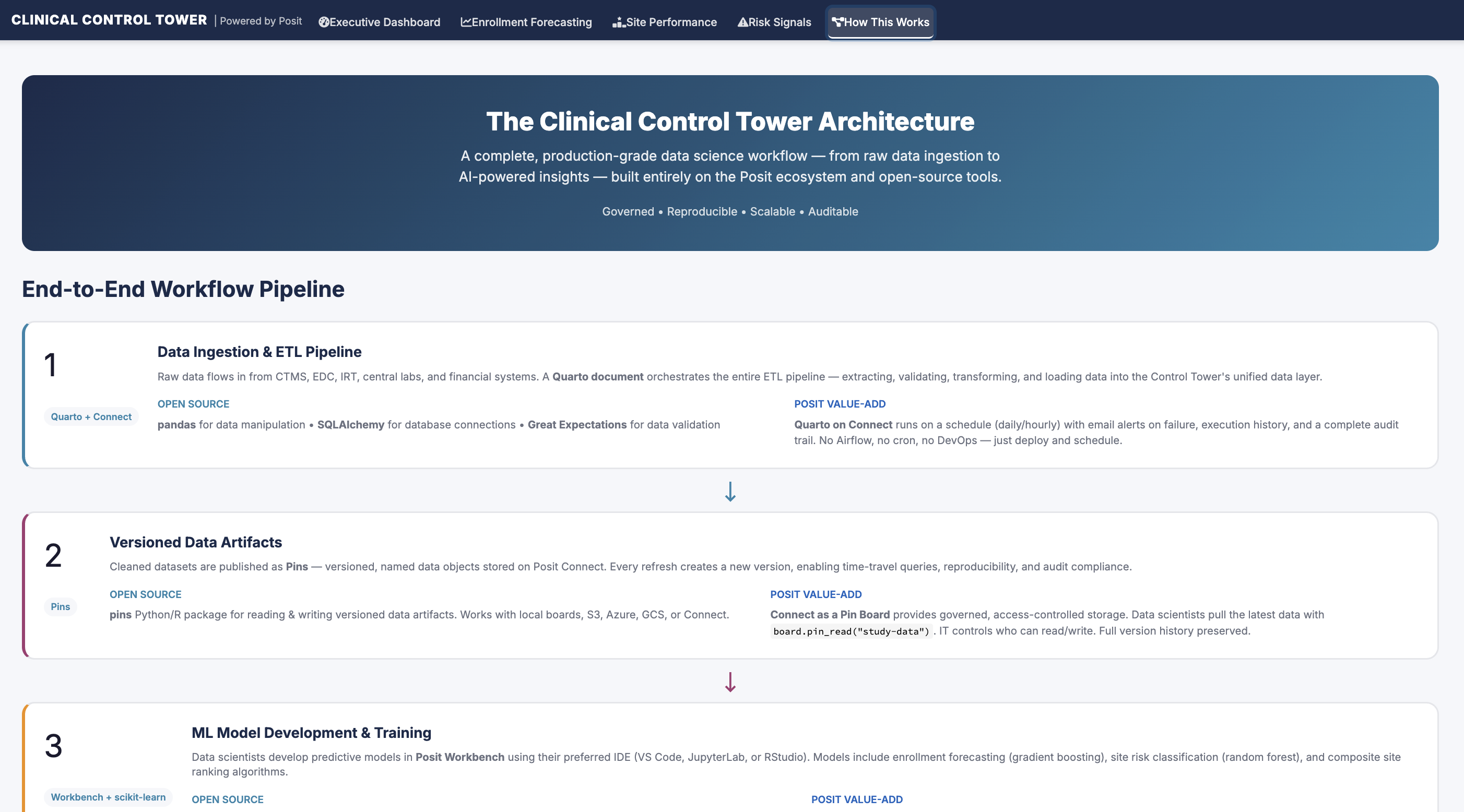
Demo applications generated from discovery call transcripts.

Posit is a technical product in a technical ecosystem, and a generic demo often doesn't land with an analytics or IT leader who needs to see the value inside their own workflow. So I built an AI-powered workflow that ingests discovery call transcripts, hands the customer context to an AI model, and generates a much more customized data application for the next demo call. The build instructions include a hard requirement to add educational sections, so the apps also teach end users, IT, and analytics leadership exactly how Posit fits into their business and data workflows. The two below are the most mature examples.

Tools I use day to day

Claude Code Claude API Gemini Positron Assistant Databot

Resume

A summary of the last fifteen years.

Open resume page